Evaluated, restructured, and rebuilt a 6-module onboarding course for a national religious nonprofit, designing for clarity and learner autonomy rather than prescription.
Produced in partnership with Cre8tion. The course was created for The Assembly of Canonical Orthodox Bishops of the United States of America.
The Brief
The client came in with existing course materials that had been built up over time as her organization’s initiative evolved. The content was thoughtful but fragmented, and the course no longer reflected where the program was headed. My job was to evaluate what existed, work with her to build a new framework, and then rebuild the course from the ground up in a way that felt cohesive, supportive, and genuinely aligned with her voice and her organization’s mission.
My Role
I joined the project at the evaluation stage, reviewing the existing materials and identifying what was working, what needed restructuring, and what gaps needed to be filled. From there I led the framework development sessions with the client to build a clear course outline, then moved into the build phase where I conducted in-depth conversations with her on each lesson topic and used those conversations to write scripts that captured her voice and perspective. I also designed a full suite of new learner resources and revamped several existing ones.
The Process
Evaluating before building.
The first thing I did was spend real time with the existing materials before making any recommendations. Understanding what was already there, and why it had been built the way it was, mattered before suggesting changes. That evaluation shaped the framework conversations and made sure we weren’t throwing away things that were actually working.
Redesigning the learning path around the learner’s experience.
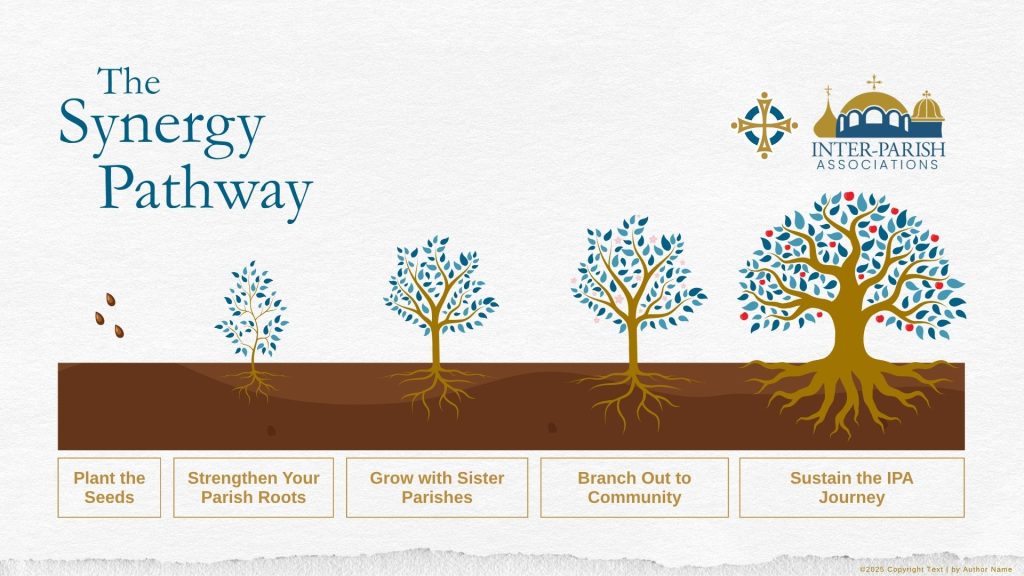
The original course explained what Inter-Parish Associations were, but the structure made it hard for a volunteer parish leader to build confidence as they moved through it. Working with the client, we reorganized the content so that the course built understanding progressively, reducing overwhelm and giving learners a sense of momentum and support at each stage rather than landing them in information all at once.
Designing for autonomy, not prescription.
One of the most important instructional decisions on this project was figuring out how to be informative without being directive. The course needed to give parish leaders enough structure to get started, while making it clear that there was no single right way to build an Inter-Parish Association. Things like event ideas were framed as possibilities rather than requirements, and the overall tone was designed to empower each group to discover its own identity rather than follow a template. That balance, between enough guidance to be useful and enough openness to respect each community’s uniqueness, was something I kept returning to throughout the build.
Capturing the client’s voice through in-depth conversations.
All of the lesson scripts were written new. Rather than writing generic instructional content, I worked through each lesson topic in detailed conversations with the client and built the scripts from her own words and perspective. The goal was for parish leaders to feel like they were hearing from someone who genuinely understood their situation, not a course narrator.
The Resource Suite
New Resources
- Membership overview infographic
- Letter template for parishes expressing interest in joining
- Goal reflection worksheet for local groups
- Community storytelling guide and worksheet
- Intergenerational engagement reference guide
- Event planning checklist
- Community conversation cards
- Partner group discussion questions template
- Getting started guide
Revamped Existing Resources
- FAQ Document
- IPA info packet
The Outcome
The course went from a collection of accumulated materials to a unified, structured experience that meets parish leaders where they are. What I’m most proud of on this project is the tone we landed on: warm and supportive without being prescriptive, informative without being overwhelming. For a volunteer audience that wasn’t being asked to do things a specific way but needed enough clarity to feel confident moving forward, that balance was everything. The resource suite also gave each IPA something to actually use at each stage of their work together, not just content to watch and move on from.