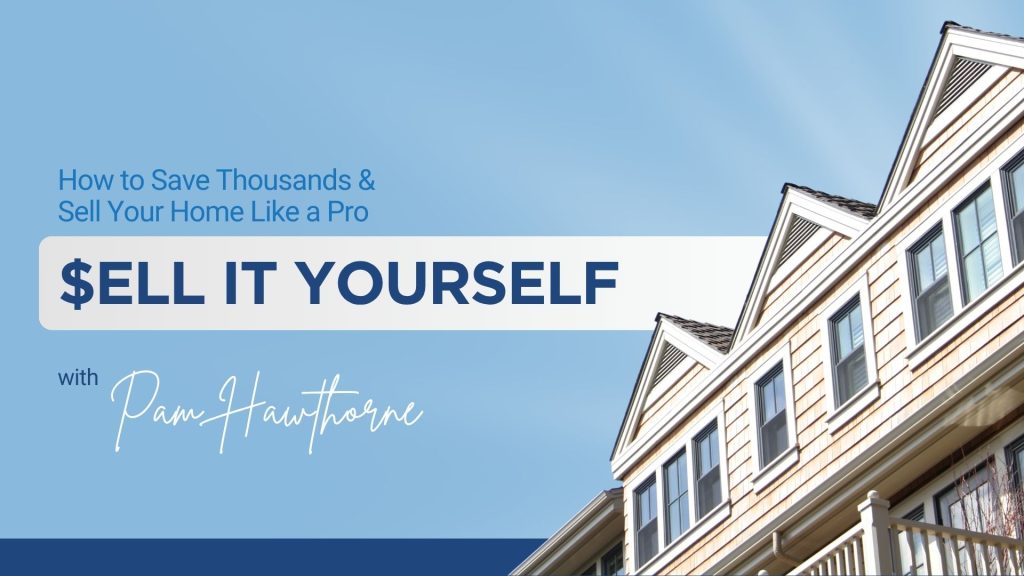
Designed the full curriculum, learning path, and resource suite for a 7-module course teaching homeowners how to sell their own property from start to finish, without an agent.
Produced for a client in partnership with Cre8tion. Read the full case study on Cre8tion’s website →
The Brief
The client was a real estate professional who wanted to teach homeowners how to sell their own properties without an agent. She had years of industry experience and a strong point of view, but her knowledge hadn’t been organized into a course yet. My job was to figure out what she actually knew, what order it needed to be taught in, and how to turn it into something a complete beginner could follow and act on.
My Role
I was the primary learning experience designer on this project from day one. That included leading the framework development sessions with the client, writing all lesson scripts and course content across all seven modules, and designing the full suite of learner resources. I worked closely with a graphic designer who brought the visual elements to life, while I owned the instructional architecture, content, and resource design entirely.
The Process
Building the learning path from the ground up. Rather than jumping straight into content, I led the client through a series of structured discovery sessions to map out the actual journey a homeowner needs to take to sell successfully, starting from the first decision to list all the way through closing. I asked questions that drew out not just what she knew, but in what order a learner needed to know it. That process produced the course’s core framework: a clear, linear progression that gave every subsequent content decision a place to anchor.
Using personal experience as an instructional tool. During the build, I was personally in the middle of selling my own home with a realtor. That lived experience turned out to be one of the most valuable things I brought to this project. I knew which questions first-time FSBO sellers would actually have, because I was asking them myself in real time. My fiancé later said he wished I had started building the course a few months earlier so we could have sold our own home using it, which felt like a pretty meaningful validation of how practical and actionable the content had become.
Designing for action, not just knowledge. A recurring design decision throughout the course was choosing resources that moved learners from understanding to doing. Rather than leaving concepts in the lesson scripts alone, I developed a full suite of practical tools learners could use at each stage of the selling process: checklists, worksheets, templates, and guides that corresponded directly to real decisions and tasks they’d face.
Making the interactive tools tactile. For the financial concepts in the course, specifically commission costs, pricing strategy, and equity, I designed three interactive calculators that let learners plug in their own numbers rather than working from a fixed example. The goal was to make abstract financial tradeoffs personally meaningful, since a learner seeing their own potential savings is far more motivating than a hypothetical scenario.
The Resource Suite
In addition to the lesson scripts and course framework, I designed the following learner resources:
- Pre-listing home preparation checklist series (5 checklists)
- AI-assisted listing description template
- Photography shot list for listings
- Pricing strategy worksheets
- Phone script resources
- Showings do’s and don’ts guide
- Property flyer template
- Offer comparison matrix
- Offer evaluation worksheet
- Contract to closing checklist
- Troubleshooting worksheet for stalled listings
The Outcome
By the end of the project we had a complete seven-module course with a full resource library attached to it. What I’m most proud of is that the finished product genuinely sounded like the client, not like a generic real estate course. That was intentional. A lot of my work in the discovery sessions was listening carefully enough to pull out her specific perspective and experiences, and then building the curriculum around those rather than starting from a standard template. The resource suite in particular ended up being much more comprehensive than originally scoped, because the deeper I got into the content, the more gaps I could see where a learner would need a practical tool to actually apply what they’d just learned.